

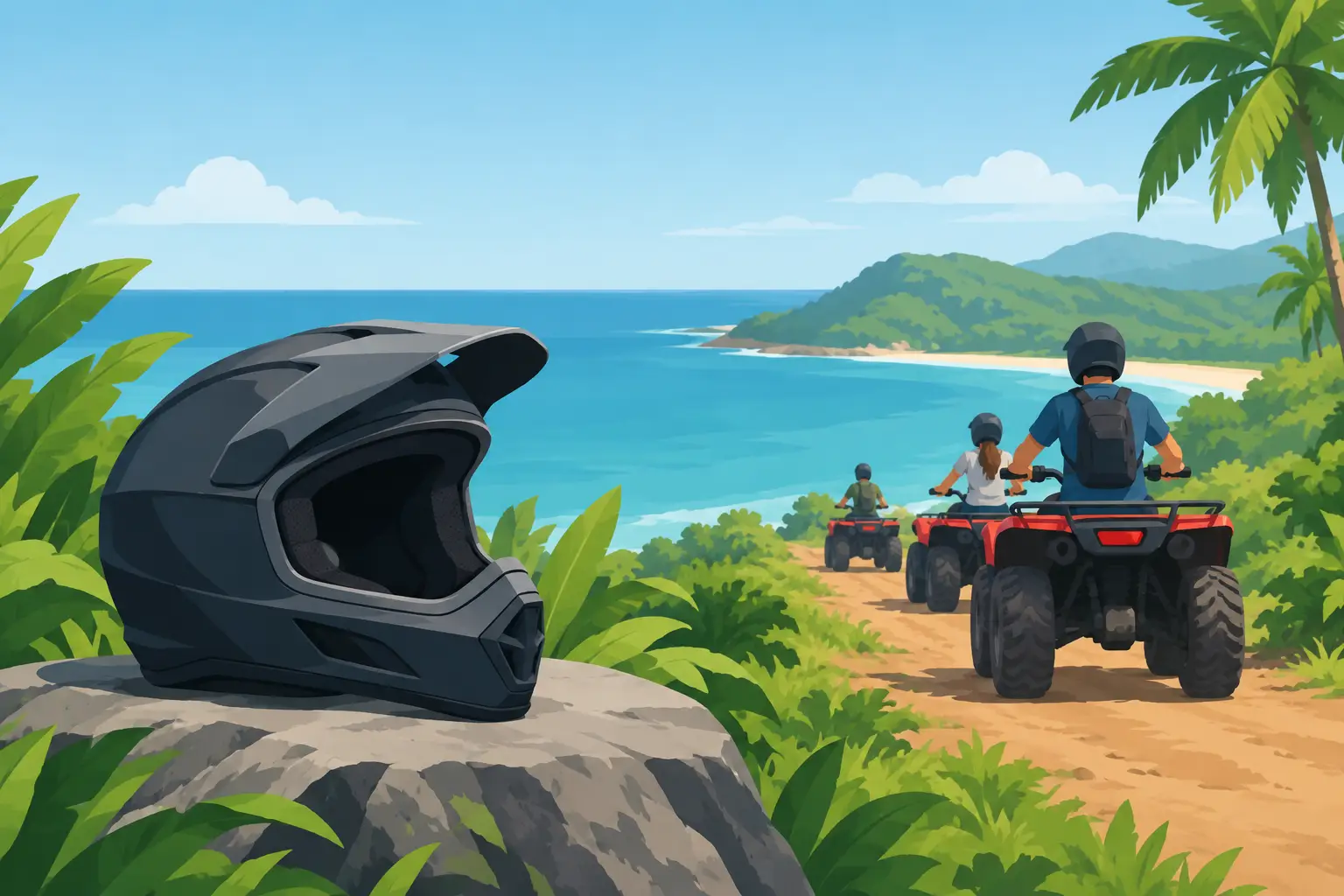
The trail is calling, the sea breeze is rising, and you are ready to trade the usual sightseeing route for volcanic terrain, village roads, and wide-open island views. Before the engines start, one practical question deserves a clear answer: are ATV helmets provided? On a professionally guided ATV experience, a properly fitted helmet should be part of the safety setup, not an extra you have to chase down after arriving.
At Coastal Adrenaline, helmets are provided for riders as part of the guided experience. Your guide will help make sure your helmet fits securely before the ride begins, so you can focus on the real reason you came: conquering the route and discovering the wild beauty of St. Vincent.
Are ATV Helmets Provided for Every Rider?
Yes. Every rider needs a helmet, whether it is your first time on an ATV or you have already covered plenty of off-road ground. Guided riding brings together changing surfaces, changing weather, fellow riders, and routes that can move from smooth roads to rugged trails in a short distance. A helmet is a basic piece of protective equipment that belongs on every ride.
The best guided tours make this easy. Rather than asking guests to travel with bulky gear or find equipment on the island, the operator supplies helmets and includes a fit check as part of the pre-ride process. If a helmet feels loose, presses uncomfortably, or does not sit correctly, say so before the group heads out. A quick adjustment at the start is far better than trying to manage an uncomfortable fit while navigating a trail.
Helmets are not there to take away from the freedom of the experience. They help make that freedom possible. When you know your gear is in place and your guide has walked you through the ride, it is easier to settle into the moment – the rumble of the ATV, the misty sea air, and the view opening up beyond the next bend.
What to Expect Before Your ATV Ride
A quality ATV adventure begins before anyone turns a key. Your guide should introduce the ATV, explain the controls, cover the route expectations, and review how the group will ride together. This is especially valuable for first-time riders, but experienced riders benefit too. Every destination has its own terrain, weather patterns, and road conditions.
During the safety briefing, expect guidance on braking, turning, spacing, hills, and following your guide’s signals. You may also be asked to complete a helmet fit check. The helmet should sit level on your head, not tip backward, and the chin strap should be snug enough to keep it secure without making it uncomfortable.
Ask questions if anything is unclear. There is no prize for pretending you understood a control explanation when you did not. A great adventure host wants you to feel confident, prepared, and ready to enjoy the ride at your own comfort level.
Why Helmet Fit Matters on Island Terrain
St. Vincent delivers the kind of scenery that makes an ATV ride unforgettable, but its landscape also asks riders to stay alert. One section of a route may offer coastal views and packed ground, while another brings a more uneven track, a riverside stretch, or loose material after rain. Helmet fit matters because protective gear only works as intended when it stays properly positioned.
A loose helmet can shift when you turn your head, bounce over rougher ground, or distract you from the path ahead. A helmet that is too tight can cause pressure and discomfort that pulls attention away from the ride. The right fit feels secure and stable, with enough comfort to let you enjoy the full experience.
Hair, sunglasses, and accessories can affect fit, too. If you wear your hair in a high bun or have oversized sunglasses, you may want to adjust them before putting on the helmet. Simple changes can make the fit more comfortable and keep your ride focused on the views, not on fussing with equipment.
Can You Bring Your Own ATV Helmet?
You may prefer to travel with your own helmet, especially if you ride regularly. That can be a good option, but it is still smart to check with your tour provider before arrival. The operator may need to confirm that your helmet is appropriate for the ride, in good condition, and suitable for local safety requirements.
For most vacationing riders, using a provided helmet is the easier choice. You avoid packing a large item, worrying about airline luggage space, or carrying it between hotel stops. You can arrive ready for adventure, take part in the fit check, and get moving toward the black-sand coastline or a golden island sunset.
If you do bring your own, make sure it is clean, undamaged, and has a working strap and buckle. A helmet that has suffered a hard impact or has visible cracking should not be used. Safety gear is not the place to make compromises for convenience.
What Else Should You Wear?
A helmet is the key piece of provided head protection, but the rest of your outfit can make a big difference to your comfort. St. Vincent’s warmth, tropical sun, and occasional rain showers call for clothing that is practical without taking away from the fun.
Choose closed-toe shoes with a secure fit. Sneakers or lightweight trail shoes are generally a better choice than sandals, slides, or loose footwear. Wear comfortable clothes that allow you to move easily, and remember that off-road riding can bring dust, splashes, or a little mud depending on the route and conditions.
Sunscreen is a smart addition, even when the sky looks cloudy. Bring sunglasses if they fit comfortably with your helmet, and consider a small amount of insect repellent for rides that spend time near vegetation or later in the day. A light, secure layer can also be useful for early-morning tours, when the air may feel cooler before the island heat builds.
Avoid dangling jewelry, unsecured hats, and anything that could catch, fly off, or distract you while riding. The goal is simple: dress for movement, weather, and comfort, then let the island provide the color and the drama.
Safety Is Part of the Adventure, Not a Detour From It
Some travelers hear a safety briefing and worry it means the ride will feel overly controlled. The opposite is usually true. Clear guidance gives everyone in the group a shared rhythm. Riders know where to look, how to handle the ATV, when to leave space, and how to respond when terrain changes.
That structure makes room for the good stuff: stopping at scenic viewpoints, taking photos with friends, hearing local stories, and enjoying routes that reveal more than a standard drive around the island. From historic plantation areas to quiet village scenes and dramatic coastal stretches, the experience feels bigger when you can ride with confidence.
Weather can affect the route, too. After rainfall, certain surfaces may become slicker, and your guide may adjust the pace or choose a different section of trail. That is good judgment, not a lesser adventure. St. Vincent is beautiful because it is alive with forest, rivers, sea air, and shifting tropical conditions. Respecting those conditions is part of exploring the island well.
A Quick Check Before You Set Off
Before your ATV rolls away from the starting point, take a moment to make sure your chin strap is fastened, your shoes are secure, and you know how to signal your guide if you need help. Keep your phone safely stored unless the group has stopped for photos, and listen closely when your guide explains spacing and route rules.
Then take a breath and look around. You are not just getting on an ATV. You are heading out to experience St. Vincent with the wind on your face, powerful wheels beneath you, and a local guide leading the way toward places ordinary sightseeing often misses. Put on the helmet, settle into the seat, and let the island show you what is waiting beyond the pavement.