

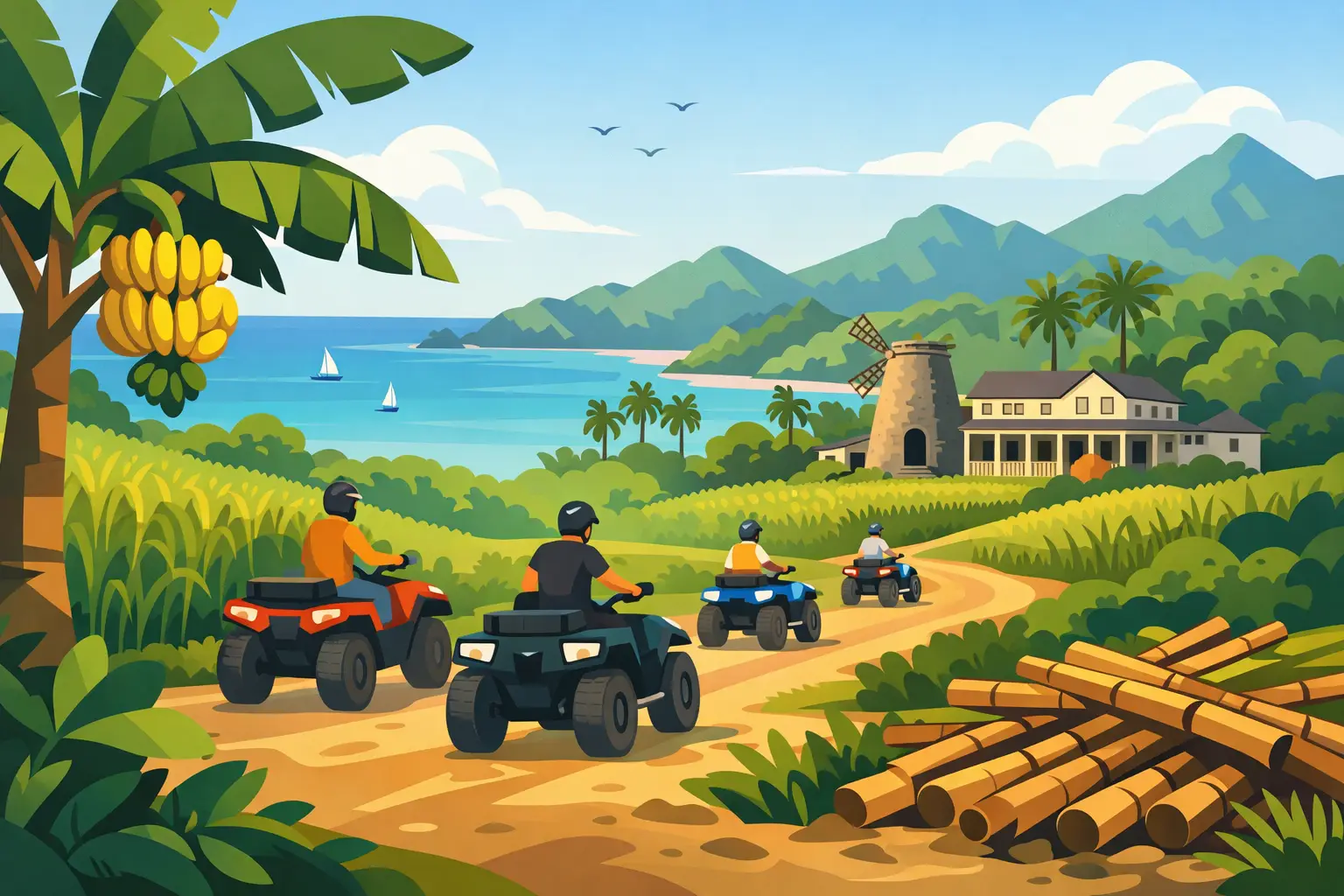
The sound changes when you leave the paved road. Tires meet earth, the air turns cooler beneath the trees, and the island opens up beyond the usual beach-day view. An ATV plantation heritage tour is built for travelers who want more than a scenic ride – they want to feel St. Vincent’s terrain, hear the stories rooted in it, and see how the island’s past still shapes the communities and landscapes around them.
This is adventure with a stronger sense of place. You may come for the splash of a riverside crossing, the climb to a wide coastal viewpoint, or the pure fun of commanding an ATV along island trails. Along the way, plantation-era landscapes add another layer: green valleys once organized around estate agriculture, old routes connecting communities, and land that carries stories far bigger than a postcard.
Why Plantation Heritage Belongs on an ATV Ride
St. Vincent is dramatic by nature. Volcanic ridges rise quickly from the sea, dense vegetation spills down hillsides, and roads can turn from village lanes to rural tracks in a matter of minutes. An ATV gives you a front-row seat to that contrast.
Plantation heritage is not simply about looking at old landholdings or imagining an easier version of colonial history. These landscapes reflect generations of labor, agriculture, resilience, and cultural change. The island’s estates were tied to crops such as sugar, coffee, cocoa, and arrowroot, as well as the forced labor and unequal systems that shaped much of the Caribbean. A good heritage experience makes room for that truth while also recognizing the living communities, traditions, and working land that exist here now.
That is where a guided ride makes the difference. Instead of passing through a beautiful valley without context, you can understand why a route matters, how communities developed around it, and what the land has witnessed. The thrill stays front and center, but the experience carries home more meaning.
What an ATV Plantation Heritage Tour Feels Like
Expect a ride that shifts moods as quickly as the island’s weather. One moment, you may be cruising past colorful homes and friendly village activity. The next, you are climbing a rugged trail where broadleaf trees, tropical birds, and misty mountain air make the world feel far away from the coast.
There is no single formula for a heritage route because conditions, access, and the character of each excursion can vary. Some rides place more emphasis on scenic terrain and rural roads. Others may pair historic landscapes with beach stops, village encounters, or viewpoints where the Caribbean Sea stretches bright and blue below. The best route depends on the day, your group’s riding comfort, and the kind of island story you want to experience.
What remains consistent is the feeling of movement. You are not watching St. Vincent pass by from behind a bus window. You are part of the landscape: feeling the curve of the trail, smelling damp earth after a passing shower, and stopping where a guide can point beyond the obvious view.
The Ride Is Part of the Story
ATVs are ideal for this kind of exploration because they bring a little adrenaline to places where a standard sightseeing tour can feel too distant. The terrain has personality. You may encounter uneven tracks, gentle slopes, muddy sections after rain, and stretches that call for a steady hand and a big grin.
First-time riders do not need to be experts to enjoy it. With a proper safety briefing, clear instructions, quality equipment, and an experienced guide leading the route, beginners can ride with confidence. Experienced riders will appreciate that St. Vincent offers more than a flat, predictable cruise. It is an island made for views, curves, climbs, and memorable trail moments.
Heritage With Respect, Not a Filter
A plantation heritage experience should never turn difficult history into decoration. The point is not to glamorize the plantation era. It is to recognize that the land holds layered stories and that those stories deserve to be shared honestly.
Your guide may speak about the agricultural traditions that supported families and communities, the role of estate economies in shaping the island, and the ways Vincentians have made these landscapes their own. Listen closely. Ask thoughtful questions. The most rewarding heritage moments often happen in the small details: a place name, a family connection, a crop growing beside the trail, or a story that changes the way you see a hillside.
Respect also means treating the route as someone’s home, workplace, or community space. Keep to designated paths, follow your guide’s direction, avoid disturbing crops or wildlife, and greet people with the warmth you would hope to receive in your own neighborhood. That spirit turns an exciting ride into a welcome exchange.
How to Get Ready for the Trail
Come dressed for motion, weather, and the possibility of a little mud. Closed-toe shoes are the smart choice, and lightweight clothes you do not mind getting dusty will make the day more comfortable. Sunglasses can help with glare, while sunscreen is essential even when clouds roll across the hills.
Bring water, and keep your phone or camera secure. You will want photos, especially when the route opens to a panoramic view, but the best shots happen when you are safely stopped. Let the guide know if you are celebrating a birthday, traveling as a couple, or riding with a private group. A heritage ride can become an even better memory when it fits the moment you came to mark.
Do not overthink the riding part. Pay attention during the briefing, maintain a safe following distance, and ride within your comfort level. Fast is not always better. A controlled pace gives you more time to read the terrain, enjoy the scenery, and catch the details that make the route special.
Timing Changes the Experience
Morning rides can bring cooler air, quieter roads, and soft light across the hills. Later in the day, the island feels warmer and more alive, with village activity and vivid tropical color. Sunset has its own magic when a route ends near the coast and the sky begins to glow.
Weather matters, too. A recent shower can make the greenery brighter and the trail more adventurous, while dry conditions may create dustier, faster-feeling sections. Neither is automatically better. If you want a more rugged off-road feel, a little rain can add excitement. If you prefer clearer views and drier ground, choose a time of year and departure window that suits that preference.
Make It More Than a Photo Stop
The most shareable travel experiences are not always the ones with the most dramatic photo. They are the ones that give you a story to tell when you get home. Maybe it is the first time you powered through a trail with your friends cheering behind you. Maybe it is the quiet moment at a viewpoint when your guide connected the green valley below to the island’s agricultural past.
Coastal Adrenaline brings that balance to life through guided ATV experiences designed around St. Vincent’s natural energy, local knowledge, and unforgettable terrain. The goal is not to rush you from landmark to landmark. It is to help you feel the island under the wheels, in the sea air, and in the stories shared along the way.
An ATV plantation heritage tour works especially well for travelers who have already done the resort pool, the beach chair, and the ordinary sightseeing loop. It gives couples a shared challenge, friend groups a reason to laugh hard and get a little muddy, and curious visitors a fuller introduction to St. Vincent.
When you ride with curiosity and respect, every bend in the trail becomes more than a turn. It becomes a chance to see the island as Vincentians know it: beautiful, powerful, deeply rooted, and always worth another look.