



A first ATV ride should begin with the view, not a battle with a clutch. So, do ATVs have automatic transmissions? Many do, especially the utility and adventure-ready machines commonly used for guided trail experiences. They are built to let riders focus on steering, terrain, and the rush of St. Vincent’s sea air instead of thinking about when to shift gears.
That does not mean every ATV works exactly the same way. Some models use a fully automatic transmission, some use a manual gearbox, and others offer an automatic system with rider-controlled shifting. Knowing the difference helps you arrive ready to enjoy the ride, whether you are heading toward a volcanic black-sand beach, climbing toward a coastal viewpoint, or rolling through village roads with your group.
Do ATVs Have Automatic Transmissions? Yes, Many Do
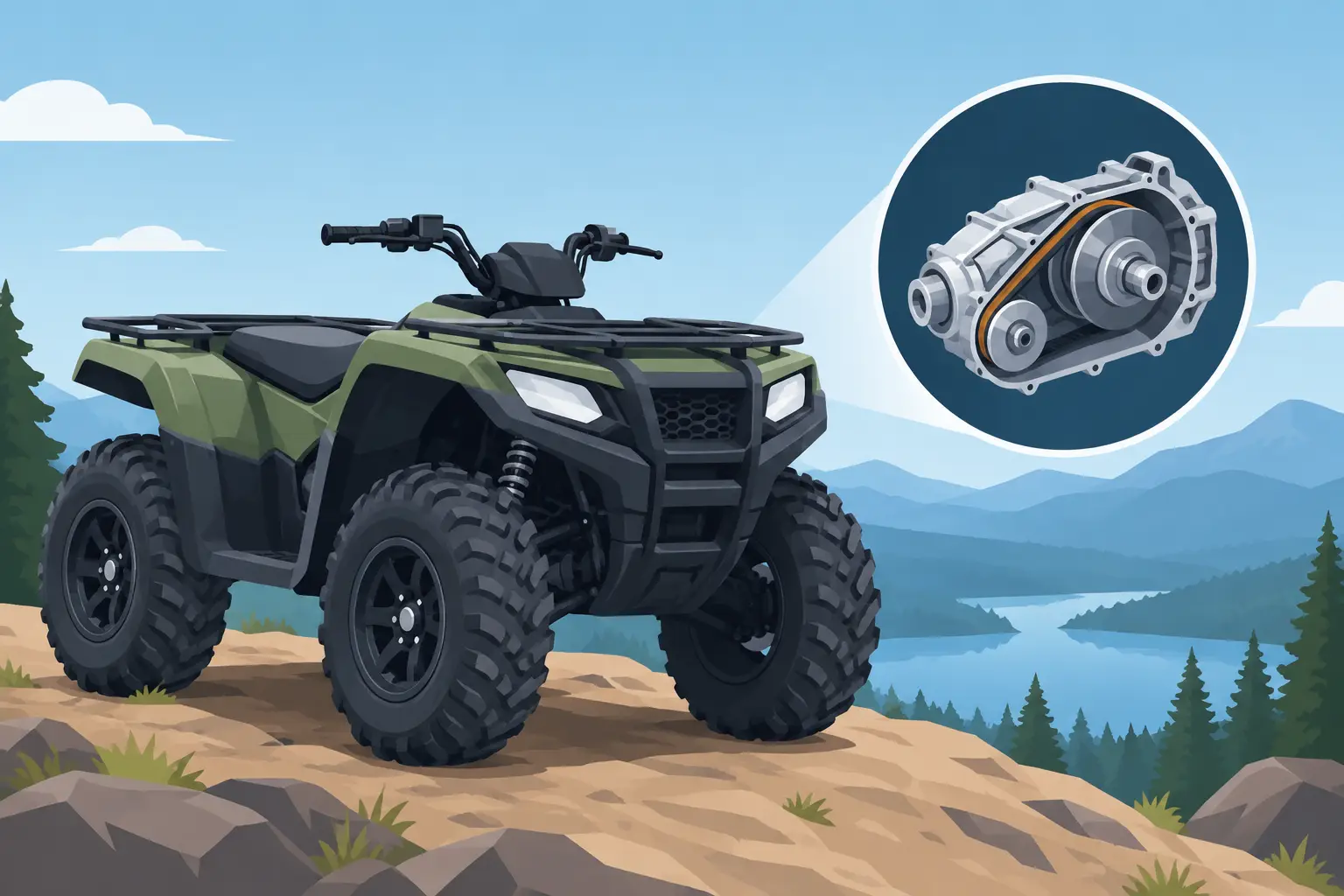
Automatic ATVs are extremely common. Most use a system called a continuously variable transmission, usually shortened to CVT. Rather than moving through first, second, third, and higher gears as a traditional manual vehicle does, a CVT adjusts its ratio continuously as you accelerate.
In plain language, you select the appropriate range, press the throttle, and the ATV delivers power for the situation. Ease into the throttle for a smooth start. Add more when the trail opens up or when the machine needs more pull. When you slow down, the transmission adjusts again.
Many automatic ATVs have a simple selector with Park, Reverse, Neutral, and High. Some also include Low range. High range is generally used for normal riding and smoother, faster sections of trail. Low range provides more controlled pulling power for slow, steep, rough, or demanding terrain. Your guide will tell you which setting is right for the route and conditions.
For new riders, that simplicity is a major advantage. There is no clutch lever to coordinate and no foot shifter demanding attention while you are learning body position, braking, and how the ATV responds on changing surfaces.
Why Automatic ATVs Work So Well on Guided Rides
An island ATV adventure can change character quickly. One moment you may be passing lush greenery and colorful homes; the next, you are feeling the texture of a rugged track or stopping for a wide-open Caribbean view. An automatic transmission lets riders stay present for those moments.
It also makes group riding easier. Every rider can concentrate on following the guide’s line, maintaining a safe distance, and responding to trail instructions. For couples, birthday crews, and friends riding together for the first time, fewer controls often means less hesitation at the starting point and more confidence as the ride finds its rhythm.
Automatic does not mean passive, though. You are still responsible for controlled throttle input, smooth braking, looking where you want to go, and following your guide’s instructions. The machine handles the shifting. You handle the ride.
At Coastal Adrenaline, that combination is part of what makes a guided ATV experience feel accessible without losing its edge. You can enjoy the power and presence of a capable ATV while experienced guides help you ride responsibly through the landscapes that make St. Vincent unforgettable.
What a CVT Feels Like on the Trail
If you have driven an automatic car, an ATV CVT will feel familiar in one way and different in several others. There is no familiar series of gear changes. Instead, you may notice the engine speed rise as you add throttle, while the transmission adjusts to deliver the needed power.
On a climb, the engine can sound more active than you expect. That is normal. The machine is working to keep power available as the surface and incline change. On loose gravel, packed dirt, or uneven ground, the important thing is to apply throttle smoothly rather than stabbing at it.
The absence of gear changes can make an ATV feel direct and responsive. That can be exciting, but smoothness matters. Fast, abrupt throttle movements can upset your balance or cause unwanted wheel spin on slippery terrain. A steady hand gives you better control and a more comfortable ride.
High Range and Low Range Are Not “Fast” and “Slow” Buttons
This is one point that surprises many first-time riders. Low range is not just for riding slowly, and High range is not simply a speed setting. Low range gives the ATV more torque at lower speeds. Think of it as the setting for deliberate control when the terrain demands it.
High range is better suited to general trail travel where the ATV can move freely without needing that extra low-speed pulling force. Shifting into the wrong range can make the vehicle feel less responsive for the conditions, which is why riders should follow the setup instructions provided before departure.
Never change ranges while moving unless the ATV’s instructions specifically say it is safe to do so. On a guided ride, ask if you are unsure. A quick question at a stop is always better than guessing on the trail.
Manual and Semi-Automatic ATVs Still Have Their Place
Not every ATV is automatic. Traditional manual models use a clutch and a foot-operated gear shifter, much like a motorcycle. The rider selects gears manually and coordinates throttle, clutch, and shifting. Experienced riders may enjoy the added involvement and the precise control a manual setup can provide.
Semi-automatic ATVs sit somewhere in the middle. Depending on the model, riders may shift with a foot lever or buttons without operating a traditional hand clutch. Other machines use paddle shifters or electronically controlled systems that allow manual gear selection while reducing some of the physical work.
These options can be great for riders who want a more hands-on mechanical feel. But they ask more from the rider, especially on unfamiliar terrain. If your vacation goal is to discover scenic routes, share laughs with your crew, and stop for photos without worrying about stall points, an automatic ATV is often the friendlier choice.
Automatic Does Not Mean You Can Skip the Safety Basics
The transmission makes riding easier, but terrain still deserves respect. Before the wheels start turning, take the safety briefing seriously. Learn where the brakes are, how the throttle feels, how to select reverse, and what hand signals or verbal instructions your guide uses.
Keep both hands on the handlebars and both feet where the ATV is designed to support them. Look ahead, not down at the front wheels. Give the rider in front of you room, especially before turns, hills, wet patches, and stops. If you feel unsure, slow down and let the guide know.
On descents, avoid relying on speed alone to get you through. Use controlled braking and follow the route guidance. Some automatic ATVs offer useful engine braking, but its feel varies by model and setting. Your guide’s instruction matters more than assumptions based on a car or another ATV you rode years ago.
Reverse requires extra care, too. Check behind you, move slowly, and use it only when needed. It is a handy feature, not an invitation to rush backward on uneven ground.
Choosing the Right ATV Experience for Your Comfort Level
If you are an ATV newcomer, an automatic machine and a structured guided ride are a strong match. You can learn the essentials in a controlled setting, settle into the handling, and spend more of the experience taking in the island around you.
If you already ride, automatic does not have to mean boring. A well-maintained ATV on a varied route can still deliver the throttle response, terrain changes, and outdoor freedom experienced riders want. The thrill comes from the ride itself: the climb, the turn, the salt in the air, the sudden reveal of a black-sand shoreline, and the shared energy of the group.
Before booking any ATV tour, ask what type of transmission the vehicles use, whether a briefing is included, what terrain the route covers, and whether there are age, license, weight, or health requirements. Wear the gear provided, choose secure closed-toe footwear when required, and dress for sun, dust, and the possibility of a little mud.
The best transmission is the one that lets you ride with confidence. For many visitors and first-time riders, an automatic ATV removes a layer of worry and leaves room for the good part: gripping the handlebars, following the trail ahead, and finding a side of St. Vincent that is meant to be felt, not just photographed.