

A steep village lane, a stretch of volcanic black sand, and a lookout washed in misty sea air can make an ATV ride feel wide open. But freedom on the trail starts with knowing the rules of the machine beneath you. ATV weight limits are not a small-print detail. They affect braking, steering, traction, suspension performance, and how confidently you can enjoy every turn of your island adventure.
For riders exploring St. Vincent and the Grenadines, understanding capacity is part of arriving ready for the fun. It helps guides pair guests with the right vehicle, helps groups plan responsibly, and keeps the ride focused where it belongs: on the views, the energy, and the hidden magic of the route.
What ATV Weight Limits Actually Mean
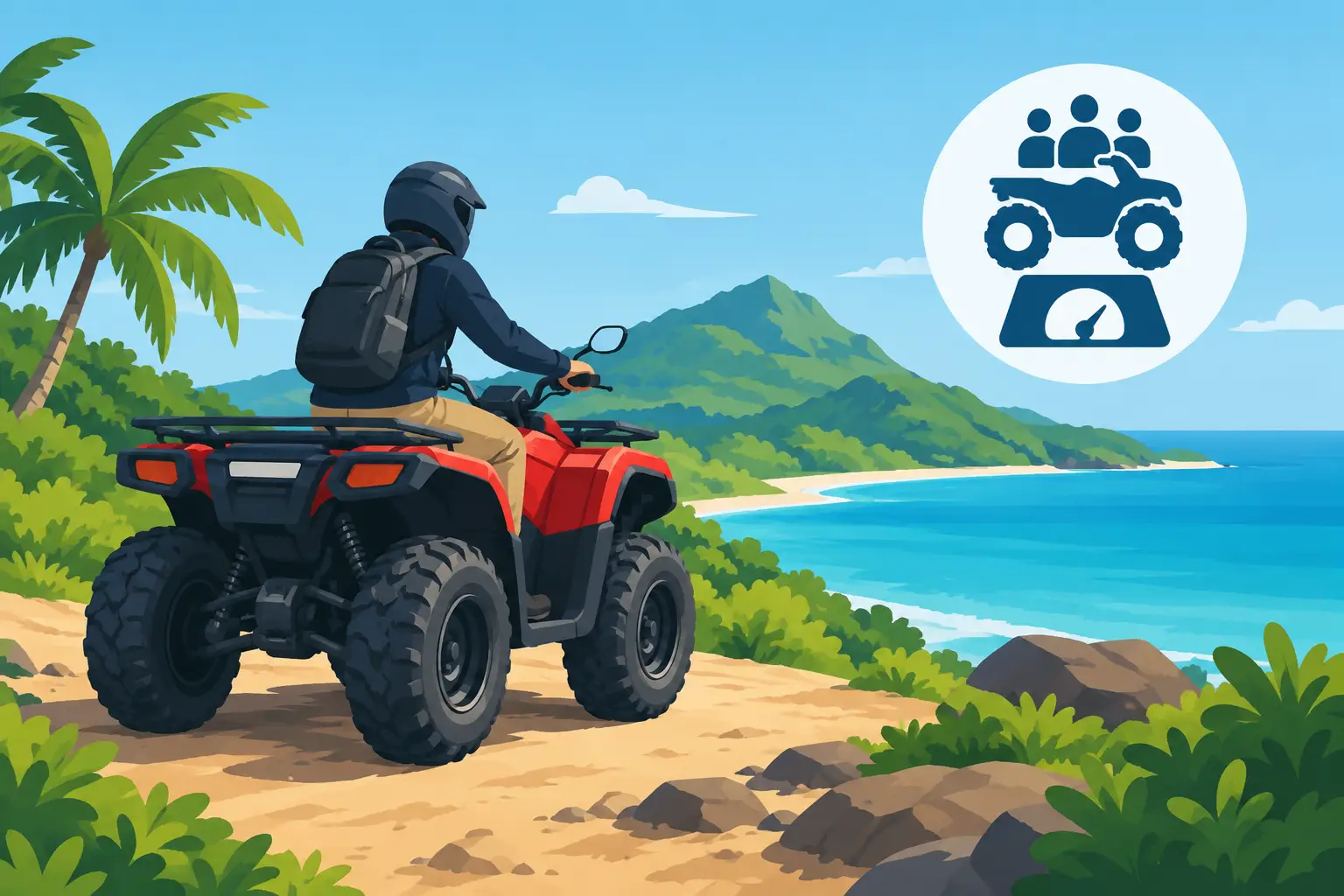
An ATV’s listed weight limit is the maximum combined load the vehicle is designed to carry. That number is not just the rider’s body weight. It usually includes the rider, an approved passenger if the ATV is built for two people, cargo, accessories, and sometimes the added weight of installed equipment.
The exact figure varies by model. A compact single-rider ATV may have a very different capacity from a larger touring or utility machine. That is why a general number found online is never a substitute for the manufacturer’s label, owner’s manual, or the instruction of your tour operator.
Think of the limit as the vehicle’s working boundary, not a challenge to test. An ATV at or beyond its rated capacity can feel heavier in corners, take longer to stop, and respond differently over ruts, loose gravel, wet ground, or uneven coastal terrain. On a guided ride, the goal is not to pack as much onto the machine as possible. The goal is a balanced, responsive ride that lets you enjoy the journey.
Why Weight Matters on St. Vincent Trails
Island terrain keeps every ride interesting. One section may be firm and smooth, while the next is damp after a passing shower or uneven from natural runoff. Add inclines, bends, river-adjacent paths, beach approaches, and changing surfaces, and the way an ATV carries weight matters even more.
A properly loaded ATV gives the suspension room to work. It maintains better tire contact with the ground and gives the rider more predictable control when accelerating, braking, and turning. Too much load can compress the suspension, reduce ground clearance, and shift the ATV’s balance in ways that make rough terrain less forgiving.
This does not mean heavier guests cannot have an amazing experience. It means the vehicle selection, route, pace, and passenger arrangement should suit the guests riding that day. A professional guide can make those calls with safety and enjoyment in mind.
The rider is only part of the equation
It is easy to focus on the person holding the handlebars, but total load is what counts. A backpack with water, cameras, towels, or extra gear adds weight. So does a passenger. Even smaller items can matter when a vehicle is already close to capacity.
For most guided sightseeing rides, packing light is the smart move. Bring the essentials you need for comfort and photos, then leave bulky bags and unnecessary items behind. You will feel less restricted, and your ATV will be better prepared for the terrain ahead.
Passenger rules are not optional
Not every ATV is designed to carry a passenger. A single-rider ATV should remain a single-rider ATV, even if there seems to be room behind the seat. Passenger-capable models are built differently, with dedicated seating, footrests, handholds, and a chassis designed to manage the added load.
When two people ride on an approved two-up ATV, both riders need to follow the guide’s instructions. The passenger should keep both feet on the designated footrests, hold on correctly, and move with the rider through turns rather than fighting the motion. A good passenger helps keep the ATV stable. An unprepared one can make even an easy trail feel awkward.
How to Check Capacity Before You Ride
The best time to discuss weight limits is before arrival, not after helmets are fitted and the group is ready to roll. When booking a tour, share any information the operator needs to match you with the right ATV and riding setup. This is especially helpful for couples, groups, and guests who have questions about comfort, passenger seating, or mobility.
On the day of your ride, listen carefully during the safety briefing. Your guides know the fleet, the route conditions, and the pace that works best for the group. They may adjust seating, recommend a particular vehicle, or ask that bags be stored before departure. These choices are about creating a better ride, not taking excitement away from it.
Before starting the engine, take a moment to check that you can sit comfortably, reach the controls without stretching, and place your feet securely where they belong. If something feels off, say so. A few minutes of adjustment at the start can make a major difference once the trail opens up.
Capacity Is Not the Same as Comfort
A vehicle may technically be within its maximum rated load and still not provide the most comfortable experience for a particular route. This is where conditions matter.
A relaxed road section and a more rugged off-road trail ask different things of both rider and machine. Rain can make the surface slick. A scenic route with longer climbs may call for more cautious throttle control. A passenger who is new to ATVs may prefer a gentler pace, even on an approved two-person vehicle. There is no prize for choosing the most demanding setup when a comfortable, well-matched option will make the day more enjoyable.
The same is true for gear. A small waist pack is usually easier to manage than a heavy backpack that shifts with every bump. Secure, lightweight items help you move naturally and keep your attention on the guide, the trail, and the landscape around you.
Ride Within the Limit, Not Just Under It
Being slightly under an ATV’s maximum capacity gives you a useful margin for changing terrain and movement on the ride. It also helps preserve responsive steering and braking when the trail becomes uneven. This is particularly valuable for first-time riders, who are still getting used to throttle control, body position, and the rhythm of off-road travel.
Experienced riders benefit from that margin too. Skill does not change the physical limits of a machine. Respecting capacity is part of the discipline that lets riders enjoy high-energy terrain while treating the vehicle, the environment, and fellow guests with care.
At Coastal Adrenaline, a great ride is built around more than horsepower and scenic stops. It is the confidence of knowing your equipment is suited to the experience, the reassurance of expert guidance, and the thrill of discovering St. Vincent from a new perspective.
Make Space for the Adventure
The best ATV day feels effortless: helmet secured, hands steady on the bars, warm island air moving past, and another extraordinary view waiting around the bend. Understanding ATV weight limits helps create that feeling because the machine can do what it was designed to do.
Ask questions before you book, travel light, follow the guide’s instructions, and choose the setup that fits your group honestly. Then you can focus on the real reward: conquering the trail, sharing the moment, and carrying home memories that feel every bit as vivid as the ride itself.