


The best island rides have room for the good stuff: misty sea air, the rumble of the trail, a black-sand shoreline coming into view, and the people you came to St. Vincent to celebrate with. ATV passenger rules are what protect that feeling. They are not there to drain the fun from the ride. They help make sure every rider, passenger, guide, and vehicle is ready for the terrain ahead.
For visitors and locals alike, the first rule is simple: never assume an ATV is built for two people just because there is space behind the driver. A great guided ride begins with the right vehicle, the right seating arrangement, and clear instructions before the engine starts.
ATV Passenger Rules Start With the Vehicle
ATVs are designed in different ways. A single-rider ATV is built for one person only, with one seat, one set of foot controls, and handling calibrated for the rider’s weight and movement. Putting a passenger on a single-rider machine changes its center of gravity, braking distance, turning response, and stability on uneven ground.
That matters on St. Vincent’s varied landscapes. A route can shift from a village road to a rocky track, from a riverside path to an open coastal viewpoint in a short stretch. Loose gravel, mud after rain, steep sections, and sharp bends all ask more of the vehicle and the person operating it. An extra person on a machine not designed for passengers can make those moments much less predictable.
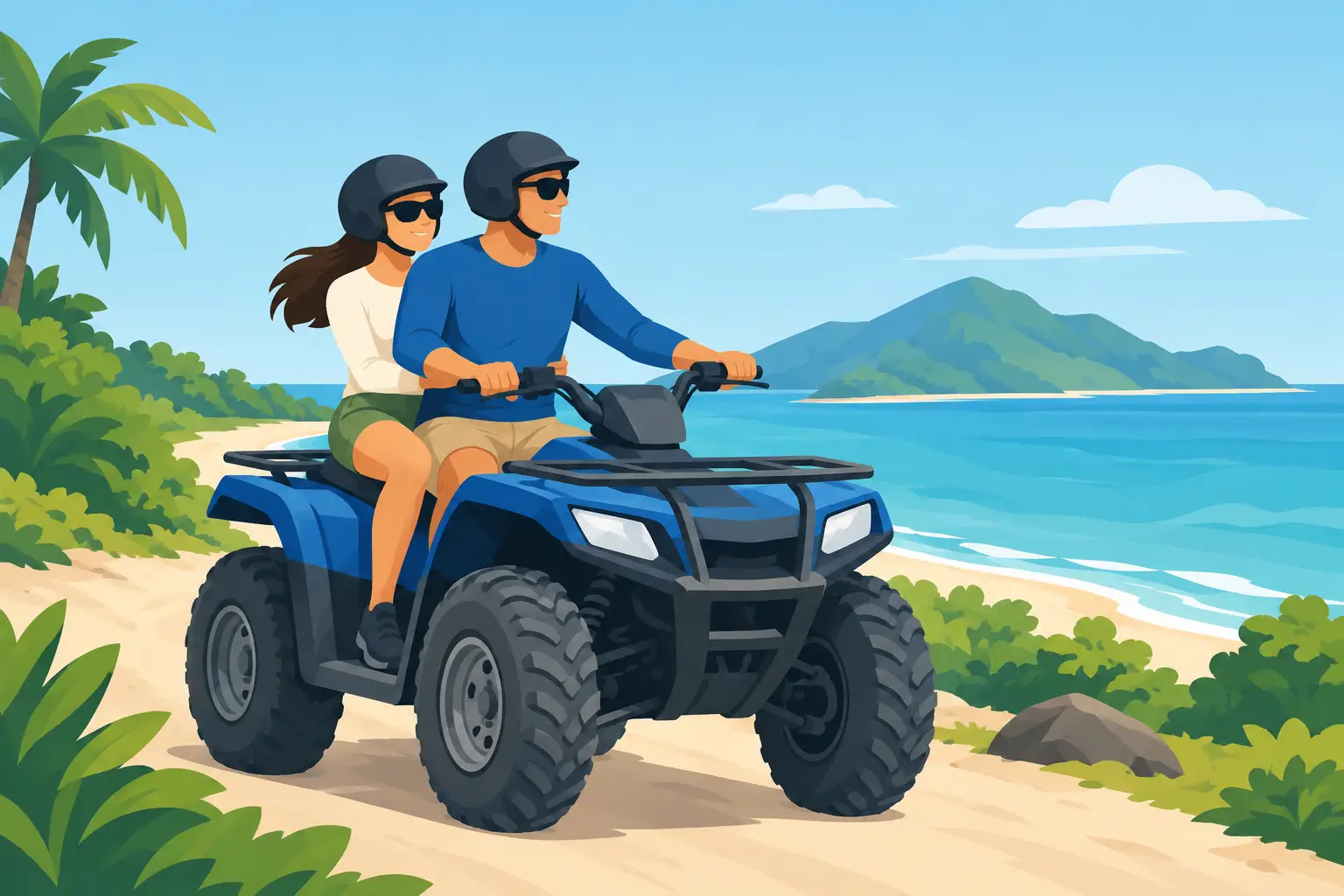
If you want to share the experience, ask whether the tour uses a properly designed two-up ATV or another vehicle specifically approved for a driver and passenger. These vehicles should provide a designated passenger seat, secure handholds, and passenger footrests. The answer may affect the tour you choose, but it is always better to choose the right setup than to squeeze into the wrong one for the sake of a photo.
What Passengers Need Before the Ride
Being a passenger does not mean being along for the ride without responsibility. A passenger’s movements can affect how an ATV responds, especially through corners, across rough ground, or on climbs and descents. Before departure, the guide should explain where to hold on, where to place both feet, and how to move with the driver rather than against them.
A passenger should keep both feet on the designated footrests at all times. Feet hanging off the side can strike rocks, branches, or the ground, while shifting a foot toward a wheel or axle creates an obvious hazard. Passengers should also sit facing forward and avoid leaning outward for photos while the ATV is moving.
Helmets are essential for everyone on the vehicle, not only the driver. Depending on the ride conditions and operator requirements, eye protection, closed-toe shoes, and protective clothing may also be required. Dress for the trail, not just the beach. Sandals may suit a sunset by the sea, but they do not offer the protection or grip needed around an active ATV.
The passenger’s job in turns and on hills
On a smooth road, it can feel natural to relax completely. Off-road terrain is different. A passenger should follow the driver’s body movement in turns and keep their weight centered rather than suddenly shifting to look around. On hills, staying calm and following the guide’s instruction helps the driver maintain control.
The most useful habit is communication. If a passenger feels uncomfortable, needs a break, or notices that a helmet strap has loosened, they should tell the driver or guide right away. There is no prize for pushing through uncertainty. The best tours leave room for questions, water breaks, photos, and a reset before the next section of trail.
Age, Size, and Experience Rules Can Differ
There is no universal passenger age that fits every ATV ride. Requirements can depend on local regulations, the vehicle manufacturer’s limits, the terrain, insurance standards, and the operating procedures of the tour company. A passenger may need to meet a minimum age, height, or weight requirement to safely reach the footrests and hold on correctly.
That is why families should check passenger eligibility before booking, rather than arriving with assumptions. A child who cannot sit securely with both feet supported should not ride as a passenger. Likewise, a smaller adult may not be suited to every two-up vehicle or every route. Good operators consider the actual person, not only the number on a booking form.
Experience also matters, though a passenger does not need to be an expert rider. First-time guests can have an incredible ride when the route, pace, vehicle, and briefing match their comfort level. More experienced guests may be ready for a more energetic trail, but they still need to follow the same passenger instructions. Confidence is welcome. Carelessness is not.
Why Guided ATV Rides Have Their Own Rules
Public-road rules, local laws, and vehicle requirements can vary by location. A guided tour also has its own safety policies because the guide is responsible for managing the group, the route, changing weather, and the capabilities of each guest. Those policies may limit passenger riding on certain ATVs, require a particular seating arrangement, or place restrictions on who can drive.
Listen closely during the safety briefing, even if you have ridden before. Your guide knows where a trail narrows after heavy rain, where a downhill section needs more space, and where village traffic or pedestrians may be nearby. They also know when to slow the group down so everyone can enjoy the scenery without creating unnecessary risk.
At Coastal Adrenaline, the experience is built around high-energy exploration with guided care. That means your adventure should feel free, never reckless. A quick briefing before you set out creates the confidence to enjoy the volcanic landscapes, local stories, and wide-open Caribbean views once the ride begins.
Four Passenger Habits That Can End a Ride Early
Most avoidable problems begin with small choices. Respect these four habits from the start:
- Riding double on an ATV made for one person.
- Removing a helmet or unfastening safety gear while the vehicle is moving.
- Taking hands or feet away from approved handholds and footrests for photos.
- Pressuring the driver to go faster, follow too closely, or attempt terrain beyond the guide’s direction.
Photos are part of the memory, especially when the island delivers that perfect sweep of coast, forest, or sunset light. Save the moving shots for your guide or a safe stop. When the group parks at a viewpoint, you can take all the photos you want with solid ground beneath you.
How Drivers Can Make Passengers Feel Secure
The driver sets the tone. Start slowly, use smooth throttle and braking inputs, and leave more following distance than you would when riding alone. Avoid abrupt turns, sharp acceleration, and sudden stops, especially while your passenger is still learning how the vehicle feels.
Check in after the first few minutes. A simple question at a stop can reveal whether the helmet fits, the footrests feel comfortable, or the passenger needs a slower pace. This is especially valuable for couples, friends, and celebration groups, where people may be excited to keep up even when they are nervous.
Drivers should never treat passengers as extra luggage. They are active participants in the ride, and their comfort affects everyone in the group. A steady, considerate driver lets a passenger look up, breathe in the sea air, and enjoy the route instead of gripping the handholds in worry.
Choose the Shared Ride That Fits Your Group
For some groups, the best choice is a two-up vehicle approved for passengers. For others, separate ATVs may offer more comfort, control, and personal space. It depends on the vehicle availability, rider eligibility, route conditions, and each person’s confidence level.
If you are planning a birthday ride, a private excursion, or a day out with friends, share the details when you book. Mention the number of drivers and passengers, ages where relevant, prior riding experience, and any concerns about mobility or comfort. That gives the operator a chance to organize the experience properly before your group reaches the trailhead.
The island is far more enjoyable when nobody is wondering where to put their feet or whether the ATV beneath them was meant for two. Choose the right seat, trust your guide, and let the ride carry you toward the next hidden beach, cool forest stretch, or unforgettable island view.