


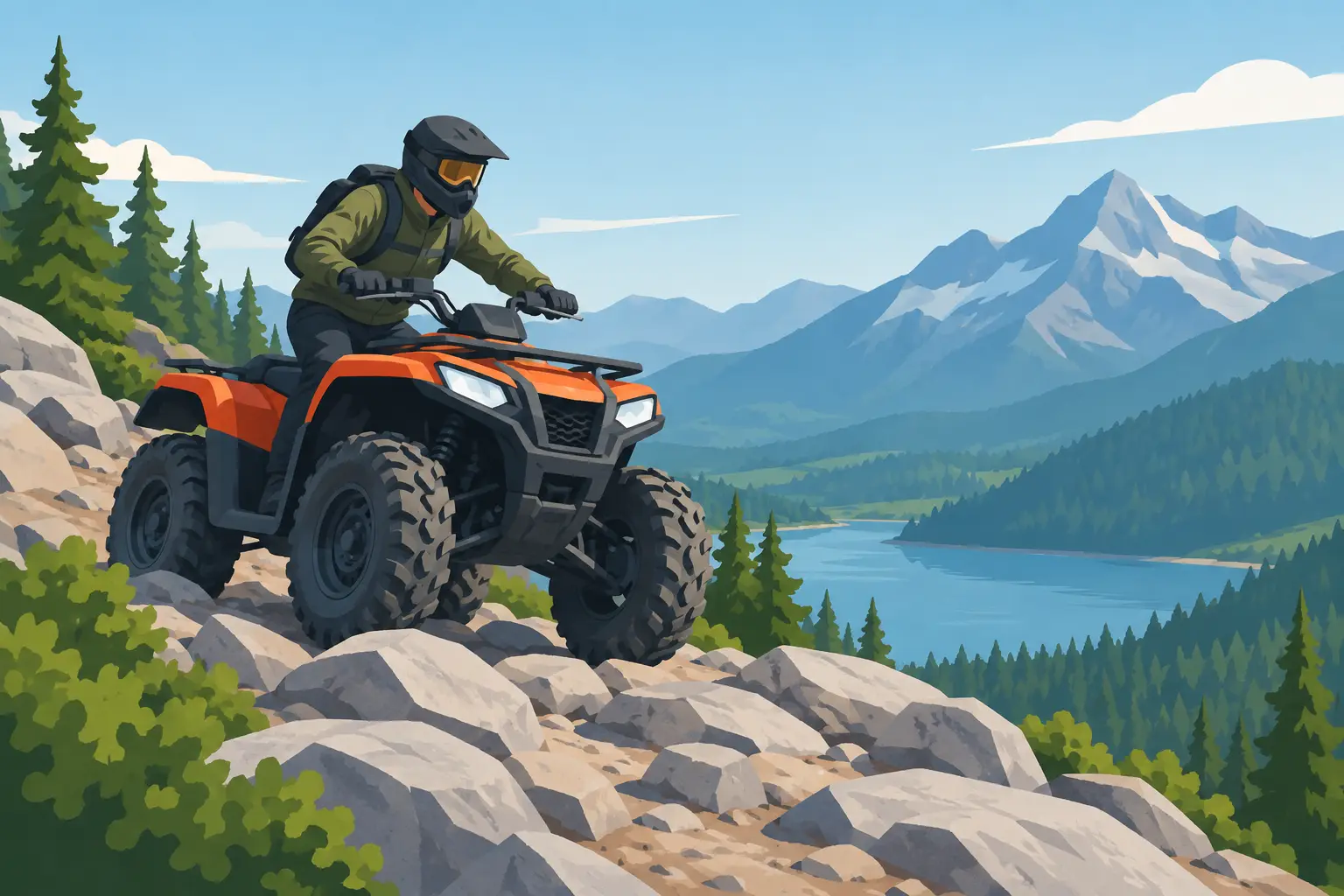
A rocky climb looks different from the seat of an ATV. What seems like one rough patch from a distance becomes a moving puzzle of loose stone, ruts, ledges, and changing grip once your wheels meet the trail. Learning to navigate rocky ATV trails is less about charging ahead and more about reading the ground, trusting your setup, and staying relaxed when the ride gets lively.
On St. Vincent, that skill brings the island closer. Volcanic terrain can shift from packed earth to scattered rock in a few turns, with lush forest, village roads, coastal views, and black-sand beauty waiting beyond the next rise. Ride with control and you get to enjoy every second of the adventure instead of fighting the trail.
Start With Your Eyes, Not the Throttle
The best line through a rocky section is rarely the straightest one. Before you enter, scan ahead rather than staring at the rocks directly in front of your tires. Look for a path with the fewest sharp edges, the most stable surface, and enough room to keep your ATV moving steadily.
Large, fixed rocks are often easier to predict than a field of smaller loose stones. Loose rocks can roll under a tire and pull the ATV away from the direction you intended. If the trail gives you a choice, choose the line that lets both front wheels meet solid ground as evenly as possible.
Keep your eyes moving. Pick a point a few yards ahead, then look farther down the trail as you approach it. Your hands naturally guide the ATV where your vision goes, so fixating on the one rock you want to avoid can make it harder to avoid.
On a guided ride, your lead guide has already read the route and knows where terrain tends to change after rain, wind, or heavy use. Watch their line, listen for route instructions, and leave enough space to make your own smooth choices. Following too closely removes your view of the ground and leaves little time to react.
Use Smooth Inputs to Navigate Rocky ATV Trails
Rocky terrain rewards patience. Sudden throttle can spin the rear wheels, throw loose stones, and upset your balance. Sudden braking can lock a wheel or shift your weight forward at the exact moment you need stability. The goal is controlled momentum.
Approach the section at a speed that feels slow enough to make decisions, but steady enough that the ATV does not bog down between rocks. Roll on the throttle gently. If you need to reduce speed, ease off early instead of waiting until you are already on top of an obstacle.
Your handlebars should stay firm but not rigid in your hands. A death grip sends every bump through your shoulders and makes small corrections feel bigger than they are. Bend your elbows slightly, keep your wrists neutral, and let the front end move naturally over uneven ground while you guide it.
If a rock causes a jolt, resist the urge to yank the bars. Let the tires settle, look ahead, and make the next correction calmly. A high-performance ATV is built to handle uneven terrain, but it performs best when the rider gives it clear, measured inputs.
Let Your Body Help the ATV Work
Your body position is one of the most useful tools you have. On rough, slow sections, stand lightly on the footrests with your knees bent. You do not need to stand tall or stiff. Think of your legs as extra suspension that can absorb movement before it reaches your upper body.
Keep your weight centered over the ATV unless the terrain calls for a change. On a climb, shift slightly forward to help the front wheels stay connected to the ground. On a descent, move your hips back a little and keep your chest open, allowing the ATV to roll downhill without putting too much weight over the front.
Side slopes deserve extra respect. Keep your uphill foot planted, lean your upper body slightly uphill, and avoid sharp turns across the slope. If a trail feels too off-camber, your guide may choose a different line or ask the group to cross it one rider at a time. That is not a pause in the adventure. It is good trail judgment.
Know When Momentum Helps and When It Hurts
There is a difference between maintaining momentum and carrying too much speed. A gentle climb over embedded rocks may require a little consistent throttle to keep moving. A steep descent covered in loose volcanic stone calls for the opposite: slow speed, careful braking, and a long look ahead.
When climbing, avoid stopping halfway unless your guide instructs you to do so. Starting again on a loose incline can be more difficult than continuing through it. Choose your line at the bottom, stay loose, and keep a steady pace over the rise.
When descending, let the ATV do its work. Use controlled braking as instructed during your safety briefing, avoid coasting too fast, and keep the wheels pointed where you want to go. If the rear end shifts slightly on loose rock, do not panic. Ease off, keep your body balanced, and make small steering corrections rather than overcorrecting.
It depends on the trail, the weather, and the rider. A dry route near a coastal viewpoint may offer reliable grip, while a shaded forest section after rain can be slick beneath the surface. Confident riders adapt instead of relying on one speed or one technique for every mile.
Respect Rain, Water, and Volcanic Ground
St. Vincent’s landscapes are full of character, and the weather is part of the experience. A sunny morning can turn into a passing shower, especially near greener inland terrain. Rain adds a fresh island scent and makes the scenery glow, but it also changes how rock, clay, roots, and river-edge trails behave.
Wet rock can be slippery even when it does not look glossy. Give yourself more braking distance, reduce speed before turns, and avoid aggressive acceleration. If you cross shallow water or a damp section of trail, test the grip gently before committing to a faster pace.
Volcanic stone can be beautifully dark, sharp-edged, and unpredictable under a tire. Avoid spinning your wheels over it. Spinning damages the trail, throws debris behind you, and often gets you less traction than a smooth, steady approach. Good riding protects both your group and the landscapes that make the ride worth taking.
Give Every Rider Room to Ride
Rocky trails are not the place to crowd the ATV in front of you. Keep a safe following distance so you can see the route, choose your line, and stop if needed. The rider ahead may slow unexpectedly for a rock ledge, a tighter turn, or a view so striking that the whole group wants a photo.
Use the same respect when riding with friends. A little friendly energy is part of a great island adventure, especially on a birthday ride, couples’ outing, or group celebration. But rocky terrain is not a racecourse. Save the big reactions for the beach stop, the ridgeline, and the moment the Caribbean opens up in front of you.
At Coastal Adrenaline, guides set the pace to match the route and the group, helping first-time riders feel capable while still giving experienced adventurers the terrain they came for. Ask questions during the briefing. Tell your guide if you feel unsure. Clear communication makes the entire group stronger.
What to Do When the Trail Feels Too Technical
Every rider has a moment when a section looks bigger from the seat than it did from behind the safety briefing. That is normal. The smart move is to slow down, listen, and let your guide talk you through the line.
If you feel off balance, do not put a foot down near moving wheels or try to jump off a rolling ATV. Keep both feet where they belong, maintain a calm grip, and follow the instructions you were given. If you need to stop, do so only when there is a safe, clear place to stop.
You do not earn a better adventure by pretending to be comfortable when you are not. The real win is reaching the next viewpoint, black-sand shoreline, or quiet village stretch with a story you are excited to tell.
Rocky trails ask you to stay present. Keep your eyes up, your throttle smooth, your body loose, and your respect for the landscape high. Then let the wheels rumble beneath you, breathe in the misty sea air, and enjoy the rare kind of island discovery that starts where the pavement ends.